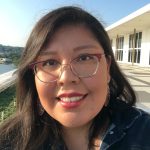
Policy Advisor, Office of Native Affairs and Policy, Federal Communications Commission
Kraynal Alfred is a Navajo Nation citizen with over 15 years of experience in our nation’s capital working on a variety of issues impacting Indian Country. Prior to starting at the FCC in 2024, Kraynal previously had served as the Tribal Liaison for USAC during the COVID-19 pandemic and worked in the Office of Public Affairs for Indian Affairs at the Department of the Interior. Kraynal holds a master’s degree in public policy from Harvard University’s Kennedy School of Government.

Senior Solution Engineer, Microsoft
With 12 years at Microsoft, Joshua Armant is a Senior Solution Engineer and trusted AI strategist at the forefront of innovation in the Federal Civilian sector, including deep partnerships with Native American Tribes. He bridges strategy and execution to turn emerging AI capabilities into real world impact.
Joshua specializes in making Microsoft 365 Copilot and Copilot Studio clear, accessible, and purpose driven—elevating AI fluency while designing solutions that respect culture, mission, and community. From pilots and hackathons to mentorship and leadership enablement, he is driven by a single goal: empowering Tribes with the confidence and tools to thrive in the AI era.
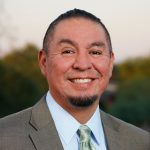
Professor of Practice; Executive Director, Indian Gaming and Self-Governance, ASU Law
Beetso is a citizen of the Navajo Nation and earned his JD and certificate in Indian law as part of ASU Law’s nationally recognized Indian Legal Program.
Prior to joining ASU Law, Beetso served as the general counsel for the National Congress of American Indians, the first and only Native person to ever serve in this capacity for the organization. While there, he handled in-house legal needs and co-managed the Tribal Supreme Court Project with the Native American Rights Fund.
Beetso also served as an attorney-adviser within the Office of the Solicitor’s Phoenix Field Office, where he provided legal services for the Western Region of the Bureau of Indian Affairs and the San Carlos Irrigation Project. Previously, he served as counselor to Assistant Secretary-Indian Affairs Kevin Washburn during President Barack Obama’s administration.

Partner, Allison Binney Law/PACE Government Relations
Allison has spent more than 25 years working on public policy, administrative law, gaming law, and advising on and negotiating agreements between the federal, tribal and state governments. Her current work at PACE focuses on advising clients on legislative and regulatory matters, advocating on behalf of clients before Congress and federal agencies, and serving as a subject matter expert before state legislatures. Her work focuses on natural resources, public safety and law enforcement, appropriations, gaming, land, health care, tax policy, and general government matters.
Prior to joining PACE as a public policy advocate, Allison served as senior staff, including staff director and chief legal counsel, to the U.S. Senate Committee on Indian Affairs from 2005 to 2011. While at the Committee, Ms. Binney oversaw and assisted in efforts to enact numerous laws impacting Native Americans including provisions in the Affordable Care Act, the American Recovery and Reinvestment Act, the Tribal Law and Order Act, reauthorization of the Indian Health Care Improvement Act, several class-action lawsuit settlements, tribal water rights, and laws relating to housing, the leasing and development of Indian lands, homeland security and language and cultural preservation. Ms. Binney also oversaw congressional investigations and oversight of federal agencies that interact with American Indians, Alaska Natives and Native Hawaiians.
Allison received a Bachelor of Arts degree from California State University, Chico, and a Juris Doctorate degree from Arizona State University’s Sandra Day O’Connor School of Law. She is a citizen of the Sherwood Valley Band of Pomo Indians in Northern California, and in her spare time she focuses on Native American youth issues serving as the Chair of the Advisory Board for the Center for Native American Youth at the Aspen Institute.
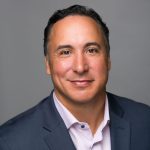
General Counsel, Pechanga Band of Indians
Steve M. Bodmer’s career is defined through his commitment to serving indigenous communities and upholding tribal sovereignty. Steve earned his Juris Doctor from Arizona State University College of Law, where he also received the Indian Legal Program Certificate, signifying study and expertise in Federal Indian law. Steve serves as General Counsel for the Pechanga Band of Indians in Temecula, California. In this role, he provides comprehensive legal counsel to the Tribal Council and the Pechanga Development Corporation, while overseeing the legal affairs of the Pechanga Resort & Casino along with other economic development projects. His practice areas include federal Indian law, gaming law, tribal governance, and tribal economic development. Steve is a veteran of the U.S. Navy and also an adjunct professor at the University of Southern California, Gould College of Law where he teaches Federal Indian Law.

Data Analyst, Gila River Indian Community
Leonard Bruce is a data analyst and policy strategist from the Gila River Indian Community, where he focuses on leveraging data to support tribal governance, education, and economic resilience. A graduate of Arizona State University with a Master’s in Science & Technology Policy, Leonard brings deep expertise in Indigenous labor, decolonizing employment systems, and the ethical use of tribal data. Through his work with Tribal DataWorks and his writing on Stories & Systems, Leonard explores how data sovereignty and storytelling can empower Native nations in the digital age.
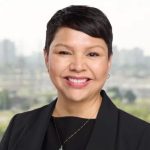
Vice President, Indigenous Relations, Aecon
Jennifer Campeau serves as Vice President of Indigenous Relations at Aecon, where she leads the company’s national strategy for Indigenous engagement, partnerships, and reconciliation. A member of the Anishinaabe from Yellowquill First Nation with kinship ties to the Eastern Region III Métis Nation of Saskatchewan, she brings more than 20 years of experience in Indigenous policy, governance, and community‑centered economic development.
Before joining Aecon, Campeau held senior roles in government, academia, and industry, including serving as a Member of the Legislative Assembly in Saskatchewan and working as an instructor and researcher focused on Indigenous entrepreneurship, nation‑building, and governance. Her career reflects a deep commitment to strengthening relationships between Indigenous communities and industry, advancing equitable opportunities, and supporting long‑term, community‑driven development.
At Aecon, she oversees the evolution of the company’s Indigenous Relations portfolio and guides organizational actions aligned with Aecon’s Reconciliation Action Plan, ensuring meaningful collaboration with Indigenous partners across Canada.
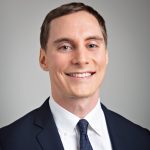
Staff Attorney, Native American Rights Fund (NARF)
NARF Staff Attorney Mark Carter has a wide-ranging legal career based on his desire to empower and uplift tribal communities and uphold the sovereign rights that tribes have possessed since time immemorial. His work has focused on a variety of federal Indian Law and civil rights issues including jurisdictional authority, child welfare, environmental protection, education, and equal protection claims.
At NARF, Mark is working on cases that address issues like asserting tribal sovereign authority to provide for the health and welfare of citizens, defending sacred places from a private developer’s resource extraction, holding a state accountable for its failure to uphold its state constitutional duty to teach children about Native American history and culture.
Prior to joining the NARF team, Mark already had garnered broad experience in tribal and federal Indian Law. Already, he had served as the Wilma Mankiller Legal Fellow at the National Congress of American Indians, the Attorney Advisor at the U.S. Department of Justice (Office of Tribal Justice), the Assistant General Counsel at the Gila River Indian Community, and as a Senior Staff Attorney at the American Civil Liberties Union focusing on Indigenous justice issues.
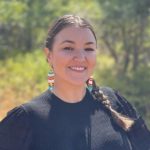
President, Lepwe Inc.
pronunciation: Lep (rhymes with yep) – way
Maranda Compton is a nationally recognized expert on issues of Native American law and policy and a highly sought after strategic consultant in the energy and technology spaces. She is the Founder and President of Lepwe, a consulting boutique that provides strategic advice and education to Tribal Nations and non-tribal entities, foundations, and governments seeking to consult, engage, and partner with Tribes.
Her current work spans co-development projects in transmission and energy generation; partnerships between venture capital and Tribal Nations, with a special focus on the development of hard science technology and manufacturing in Indian Country; and advocacy for Tribal Digital and Data Sovereignty.
Maranda is a citizen of the Delaware Tribe of Indians, a mother, and a resident of Missoula, Montana.

Associate Vice President, ASU Knowledge Enterprise
Sean Dudley leads the Research Technology Office, which provides specialized technology solutions and services that enable and protect ASU’s research community and sponsored projects. The office also organizes collaborative projects across the three state universities and supports the advancement of Arizona’s technological infrastructure.
Dudley began his career in research information technology in 1998 at the University of Wisconsin. His passion for blending scientific research and technology later brought him to Tempe, where he initially worked at the ASU Biodesign Institute in the Center for Evolutionary Functional Genomics. Soon after, he advanced to a leadership role among the Knowledge Enterprise that allowed him to develop and provide many services to ASU’s entire research community.
Dudley holds degrees in biology, computer science, and philosophy from the University of Wisconsin. He earned a Six Sigma Black Belt from ASU’s Ira A. Fulton Schools of Engineering and is currently pursuing a PhD at the School for the Future of Innovation in Society.

General Manager, Mescalero Apache Telecom, Inc.
Godfrey Enjady is the General Manager of Mescalero Apache Telecom, Inc. (MATI), where he leads one of the nation’s most successful tribally owned telecommunications companies. With decades of experience advancing broadband infrastructure in Indian Country, he has been a driving force behind expanding high‑quality, reliable connectivity for the Mescalero Apache Tribe and surrounding communities.
Under his leadership, MATI has implemented innovative network upgrades, strengthened operational capacity, and championed broadband initiatives that support economic development, education, and public safety. Enjady is widely respected for his technical expertise, strategic vision, and long-standing commitment to ensuring Tribal Nations have access to modern communications services
He continues to advocate for Tribal sovereignty in telecommunications and for equitable access to broadband resources across Indian Country.
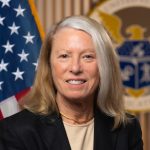
Deputy Bureau Chief, Federal Communications Commission’s Consumer and Governmental Affairs Bureau.
Barbara S. Esbin is Deputy Bureau Chief of the Federal Communications Commission’s Consumer and Governmental Affairs Bureau. In that capacity, she oversees the Bureau’s intergovernmental affairs portfolio, including the work of its Office of Native Affairs and Policy and Office of Intergovernmental Affairs, to ensure collaborative and productive engagement and consultation with state, local and Tribal governments and organizations in critical areas of communications policy and implementation of new technologies. Ms. Esbin has over thirty years of experience in communications law and policy. This includes three separate tours of duty with the FCC during which she has held a variety of senior staff positions. Most recently, she was Deputy Bureau Chief in the Wireless Telecommunications Bureau where she worked on wireless competition and consumer related matters, spectrum aggregation, allocation and management, and introduction of new technologies. She has also previously served as Deputy Bureau Chief of the Consumer and Governmental Affairs Bureau and Associate Chief of the Media Bureau; and held various senior positions in the Common Carrier Bureau (predecessor to Wireline Competition Bureau), and the Cable Services and Enforcement Bureaus. Ms. Esbin has been a partner in private practice with several firms, representing communications companies before the FCC, the U.S. Congress, and the courts, and a Senior Fellow at a Washington, DC-based think tank specializing in communications policy and law. Ms. Esbin held judicial clerkships, respectively, on the North Carolina Court of Appeals and the North Carolina Supreme Court. She received her J.D. from the Duke University School of Law and her B.A. from Antioch College.
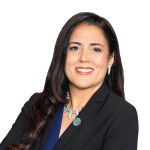
Associate Dean for Inclusive Excellence, Charles M. Brewer Professor of Trial Advocacy; Faculty Director, Indian Legal Program and Director, Indian Legal Clinic, ASU Law
Patty Ferguson-Bohnee has substantial experience in Indian law, election law and policy matters, voting rights, and status clarification of tribes. She is a clinical professor of law, the faculty director of the Indian Legal Program and the director of the Indian Legal Clinic at ASU.
Professor Ferguson-Bohnee has testified before the United States Senate Committee on Indian Affairs and the Louisiana State Legislature regarding tribal recognition, and has successfully assisted four Louisiana tribes in obtaining state recognition. Professor Ferguson-Bohnee has represented tribal clients in administrative, state, federal, and tribal courts, as well as before state and local governing bodies and proposed revisions to the Real Estate Disclosure Reports to include tribal provisions. She has assisted in complex voting rights litigation on behalf of tribes, and she has drafted state legislative and congressional testimony on behalf of tribes with respect to voting rights’ issues.
Before joining ASU in 2007, Professor Ferguson-Bohnee clerked for Judge Betty Binns Fletcher of the 9th U.S. Circuit Court of Appeals and was an associate in the Indian Law and Tribal Relations Practice Group at Sacks Tierney P.A. in Phoenix. As a Fulbright Scholar to France, she researched French colonial relations with Louisiana Indians in the 17th and 18th centuries.
Professor Ferguson-Bohnee, a member of the Pointe-au-Chien Indian tribe, serves as the Native Vote Election Protection Coordinator for the State of Arizona.

Broadband Project Manager, Shoshone-Bannock Tribes
Frances Goli is the Tribal Broadband Project Manager for the Shoshone Bannock Tribes in Fort Hall, Idaho, where she leads strategic efforts to close the digital divide across her Tribal lands in southeastern Idaho. She oversees the planning and implementation of broadband buildout projects on the Shoshone-Bannock Tribes underserved rural areas, leveraging grant funded initiatives to expand reliable, high speed internet access throughout the Fort Hall community.
The Shoshone Bannock Tribes are a member of the Inland Northwest Tribal Broadband Coalition (INWTBC), a collaborative network of Tribes working together to strengthen broadband access across the region. Through this collective approach, Frances supports efforts that promote inclusive connectivity, resource sharing, and long term sustainability, while advancing the preservation of Tribal languages, cultures, and histories guided by the principles of the Seven Generations. Her work centers on developing sustainable broadband frameworks that promote equity, access, and opportunity while reinforcing tribal self determination and sovereignty.
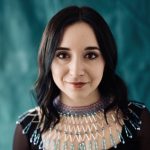
Senior Research & Policy Analyst, American Indian Policy Institute, ASU Law
Morgan Gray (Chickasaw Nation) serves as the Senior Research & Policy Analyst at the American Indian Policy Institute, where she leads AIPI’s policy and research agenda. As an attorney and former Tribal government employee, she is deeply committed to advancing research on emerging issues at the intersection of law and policy that impact Tribal communities.
Morgan brings a strong passion for telecommunications and broadband policy to her role. She previously served the Chickasaw Nation and its telecommunications subsidiary Trace Fiber Networks, LLC as a policy analyst tasked with developing and articulating the organization’s broadband development strategy. She also worked to secure federal funding for broadband infrastructure projects in Chickasaw territory, crafted a digital equity plan, and managed the Chickasaw Nation’s wireless spectrum portfolio.
Morgan served as a legal fellow for the U.S. Senate Committee on Indian Affairs while in law school, where she drafted legislation and analyzed policy proposals affecting Tribal communities. She was also a member of the Federal Communications Law Journal’s (FCLJ) editorial board, and prepared law review articles and student-authored notes for publication. After law school, Morgan clerked for the Chief Justice of the Alaska Supreme Court, Susan M. Carney, in Fairbanks, Alaska. Morgan is a proud alumni of the American Indian Law Center’s Pre-Law Summer Institute (PLSI) Program, Class of 2021.
Morgan earned her Juris Doctor from George Washington University Law School in Washington, DC. She also received a Master of Public Administration and Bachelor of Arts in Political Science from Texas A&M University.
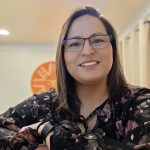
Manager, Community Development, NOANET
Leslie Hardwick, an enrolled member of the Blackfeet Nation, is the Manager of Community Development at NoaNet, a nonprofit municipal corporation advancing broadband access and connectivity across Washington State. She supports Tribal partners and rural communities through relationship-driven collaboration and community-focused broadband development.
Over the last 20 years, Mrs. Hardwick has built hands-on experience in Tribal ISP operations, telecom billing, and program implementation. What started as a way to strengthen her administrative skills became a career rooted in connection, helping communities access the services, information, and opportunities broadband makes possible. She began at Red Spectrum Communications on the Coeur d’Alene Indian Reservation, supporting day-to-day operations, helping lead a grant focused on digital navigation, and serving as a radio DJ and newscaster for Rezkast News. She later supported the Spokane Tribe during a transitional period, helping establish telecom operations and billing to strengthen service delivery and organizational continuity. From 2020 to 2024, she also worked with MuralNet supporting Tribes nationwide with ACP and practical operational guidance.
Mrs. Hardwick’s approach is grounded in relationships and coordination. She works alongside Tribal teams, peer networks, and public-sector and industry partners to connect people to resources, support shared problem-solving, and help move community priorities forward in ways that reflect local goals.
Mrs. Hardwick is a member of the Inland Northwest Tribal Broadband Coalition and one of the “Broadband Aunties.” This collaborative represents the Tribal Nations of Colville, Coeur d’Alene, Nez Perce, Shoshone-Bannock, and Spokane. The coalition grew out of relationships formed at a Tribal Broadband Bootcamp at Oregon State University and continues strengthening Tribal broadband efforts through collaboration guided by the principles of the Seven Generations and a shared commitment to building inclusive, connected Tribal communities.
She is honored to join her broadband sisters in sharing lessons learned and encouraging more women to step into and thrive in broadband leadership.
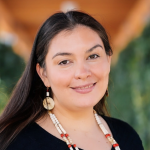 Amber Hastings
Digital Navigator and American Connection Corps AmeriCorps Member, Shoshone-Bannock Tribes
Amber Hastings serves as a Digital Navigator and American Connection Corps AmeriCorps Member with the Shoshone-Bannock Tribes, where she supports tribal community members in advancing digital access, skills, and connectivity. Her work focuses on helping community members navigate technology, access affordable internet and devices, and build confidence in essential digital skills.
Hastings plays an active role in regional and national digital inclusion efforts. She has co‑facilitated workshops at the Tribal Broadband Bootcamp, helping participants understand the digital divide and develop strategies for building Indigenous‑centered digital inclusion ecosystems. She has also represented her program as a panelist at the Net Inclusion Conference, highlighting the unique challenges and opportunities in Tribal broadband expansion.
Her work reflects a deep commitment to digital equity, Indigenous digital sovereignty, and strengthening the technological capacity of Tribal communities.
 Onawa Haynes, Esq.
President & Founder, Tribal Funding Registry (Hozhonigo Institute)
CEO – HC Growth Strategies
Onawa Haynes is an attorney, entrepreneur, and nationally recognized grant strategist committed to advancing sovereignty and economic opportunity in Tribal communities. She began her entrepreneurial journey in 2015 with the founding of HC Growth Strategies (formerly Hozhonigo Consulting), driven by a belief that Native communities deserve direct access to the capital required to build strong governments, businesses, and systems.
Since then, Onawa has led efforts that have secured over $200 million in federal and private foundation awards for more than 55 Indigenous-serving entities nationwide, including 12 Tribal Nations, Tribal housing authorities, economic development corporations, Native-led nonprofits, and public and charter schools across the Southwest, Pacific Northwest, Alaska, Hawai‘i, and the Midwest.. Her work supports critical initiatives including tribal law enforcement, behavioral health, education, infrastructure, courts, capital projects, and victim services.
She is also the President of the Hozhonigo Institute, a Native-led 501(c)(3) nonprofit and parent organization of the Tribal Funding Registry (TFR). The Tribal Funding Registry is a 100% free, searchable grants database and fundraising strategy platform created to improve equitable access to grant opportunities across Indian Country and Indigenous communities throughout the United States, including Alaska Native and Native Hawaiian communities. Approaching its one-year anniversary in March 2026, the TFR has already supported $73 million in grant applications submitted and contributed to nearly $20 million in awards to Indigenous communities nationwide.
Onawa holds a Juris Doctor from the University of New Mexico School of Law, is a member of the New Mexico Bar, and is completing her MBA through Gonzaga University’s American Indian Entrepreneurship program. Her work is grounded in cultural responsibility and the conviction that Indigenous communities should lead where resources flow.
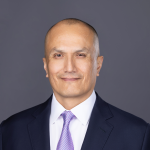
Managing Director, Wells Fargo
Dawson Her Many Horses is a managing director at Wells Fargo, which is the leading provider of capital and financial services to the Native American and Alaska Native markets. Wells Fargo has relationships with more than 400 tribes and tribally owned enterprises, with approximately $2.5 billion in credit commitments and $2.5 billion in deposits. After joining Wells Fargo in 2018, he was appointed head of Native American Banking in 2021 before being named a managing director in 2023.
Her Many Horses’ career has spanned commercial and investment banking, with a focus on Native American gaming. He began his career at Merrill Lynch after graduating from Columbia University in 2004. Her Many Horses was appointed director of Native American business development for the investment banking, wealth management, and asset management groups at Merrill Lynch. He later moved into Merrill Lynch investment banking, where he focused on the tribal gaming market. Her Many Horses received his M.B.A. from Dartmouth College in 2010 and rejoined Bank of America Merrill Lynch, where he was a banker on the Gaming team until 2018.
Her Many Horses is the founder of the Native American employee group at Bank of America and is chair of the Native American Visiting Committee at Dartmouth College. He is an enrolled member of the Rosebud Sioux Tribe of South Dakota.
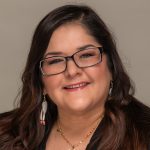
Department of Technology Services Manager, Nez Perce Tribe
Melissa King serves as the Department of Technology Services Manager for the Nez Perce Tribe in Lapwai, Idaho, where she leads transformative initiatives to modernize digital infrastructure and expand connectivity for Tribal communities. She oversees NTIA and BEAD-funded projects that deliver high-speed fiber/Internet directly to homes, ensuring equitable access to essential online services while honoring the Seven Generations principle—building solutions that serve families today and generations to come.
With a community-first mindset, Melissa drives cross-functional efforts—from website modernization to IT service enhancements—that strengthen Tribal programs and empower members. Known for fostering collaboration and delivering innovative solutions, she partners with regional stakeholders across the Inland Northwest to build secure, future-ready networks. Her work reflects a deep commitment to digital inclusion and bridging the technology gap in rural areas.
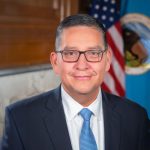
Assistant Secretary – Indian Affairs
William (Billy) Kirkland, an enrolled member of the Navajo Nation, is the 15th Assistant Secretary for Indian Affairs. He was confirmed by the United States Senate on October 7, 2025.
The Assistant Secretary for Indian Affairs assists the Secretary of the Interior in fulfilling the Department’s trust responsibilities to American Indian and Alaska Native Tribes and individuals. The post was established in the late 1970s under the authority contained in 43 U.S.C. 145.
Prior to his appointment, Mr. Kirkland delivered high-impact services to Fortune 500 companies, political candidates, and advocacy campaigns, driving strategic results for businesses and organizations across the country. His leadership experience includes managing professional teams, developing sophisticated campaign strategies, and achieving significant legislative and public relations outcomes.
Mr. Kirkland’s career in public service includes serving in the Executive Office of the President as special assistant to the president and deputy director of Intergovernmental Affairs. In this role, he led tribal engagement efforts for the White House, revitalized the White House Council on Native American Affairs Policy Agenda, and coordinated the first-ever Oval Office recognition of Navajo Code Talkers. His work advanced collaboration among federal, tribal, state, and local leaders, strengthening government-to-government relationships nationwide.
Mr. Kirkland holds a bachelor’s degree from the University of Georgia. He has been recognized with several distinguished honors, including the University of Georgia’s Top 40 Under 40 Award, designation as an Eagle Scout, and appointment to the White House Commission on Presidential Scholars.

Partner, Kaplan Kirsch
Samuel Kohn is a member of the Apsáalooke Nation (Crow Tribe of Montana) and has nearly 15 years of experience helping Indian Tribes and Alaska Natives to interpret and advance their unique legal status and political relationships with the United States. Sam represents Indian Tribes, Alaska Natives, and tribal consortia in matters of self-governance and self-determination, matters related to Indian lands and related compliance, and other engagement with the United States, all while bearing in mind the unique challenges that tribes should consider when trying to obtain the best possible long-term outcomes.
Sam served previously as Senior Counselor to the Assistant Secretary – Indian Affairs of the Department of the Interior. In this role, he supported the Assistant Secretary’s relationship with all Indian Tribes and Alaska Natives. Sam advised the Assistant Secretary on implementation of the Indian Self-Determination Education and Assistance Act, including Public Law 102-477, negotiation of collaborative stewardship agreements, protection of cultural and historic resources, Indian arts and crafts, fee-to-trust and right of way issues, Indian water right settlements, gaming matters, and roads and transportation matters.
In addition to his work in Indian law, Sam has managed nearly all stages of litigation. He has taken or defended depositions, briefed and argued motions, and won appeals, in the U.S. Court of Appeals for the Ninth Circuit, D.C. Circuit, and California Court of Appeal.
Prior to joining the firm, Sam served as a law clerk in the United States District Court for the District of Montana and the Montana Supreme Court. Sam also worked at an international firm as a member of their Native American Law and Policy, Federal Regulatory and Compliance, and litigation practice groups. He also has worked as Assistant Regional Counsel in the Office of General Counsel in the United States Department of Health and Human Services. Sam also supported Senator Max Baucus (D-MT) as part of his staff on the United States Senate Committee on Finance.
Sam is a sought-after lawyer for tribes, tribal governments and businesses and individuals navigating complex and interconnected legal, political, and policy challenges.

Commissioner of the Administration for Native Americans of the United States
Patrice H. Kunesh is a visiting law professor at the University of New Mexico School of Law and non-resident fellow at the Brookings Institution focused on issues concerning economic development in Native communities.
Previously, Kunesh served as the Commissioner of the Administration for Native Americans, at the Administration for Children and Families in the U.S. Department of Health and Human Services, where she also served as Deputy Assistant Secretary for Native American Affairs. Kunesh also was appointed to the US Treasury Community Development Advisory Board (CDFI Fund) as the representative for Native communities. In 2023, President Biden nominated Kunesh to be the Chair of the National Indian Gaming Commission.
Kunesh has held appointments as the Deputy Solicitor for Indian Affairs at the U.S. Department of the Interior and Deputy Under Secretary for Rural Development at the U.S. Department of Agriculture. In addition, she was the inaugural director of the Center for Indian Country Development, an economic policy research initiative, at the Federal Reserve Bank of Minneapolis. Kunesh started her law career at the Native American Rights Fund and then served as in-house counsel to the Mashantucket Pequot Tribal Nation. She also held faculty positions at the University of South Dakota School of Law.
Kunesh graduated with a J.D. from the University of Colorado School of Law and earned an M.P.A. from the Harvard Kennedy School of Government.
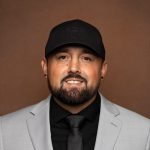
Chief Executive Officer, Ho‑Chunk Capital
An enrolled member of the Winnebago Tribe, Aaron LaPointe is the CEO of Ho-Chunk Capital, a sub-division of Ho-Chunk Inc, where he oversees all operations for Ho-Chunk Construction, Ho-Chunk Capital, HCI Management Services, Ho-Chunk Trading Group, Pony Express, and Ho-Chunk Farms. With a focus on expanding the opportunities within these divisions, Aaron also shares his expertise in the agriculture industry with tribal programs and businesses. Holding a B.S. in Mechanized Systems Management from the College of Agriculture and Natural Resources at the University of Nebraska-Lincoln, which he obtained in May 2016. Furthermore, he earned a Leading People and Investing to Build Sustainable Communities Certification from Harvard University in May 2022. He was a member of the 2022 Class of UNL Distinguished Alumni from the Chancellor’s Commission on the status of people of color. He was also recognized by the National Center for American Indian Enterprise Development by being awarded the “Native American 40 Under 40 Award”.

Partner, Womble Bond Dickinson, LLP
Peter Larson is a partner in the firm’s Tribal Affairs, Finance, and Gaming practice groups. Peter’s transactional practice focuses on representing Indian tribes, tribal entities in financing matters, and commercial and economic development in Indian country.
Peter has considerable experience in all areas of Indian gaming, including Indian lands determinations, federal, state, and tribal regulatory matters, and representation of tribal gaming agencies. He also works on other economic development issues, including land use and leasing, tribal court development, taxation issues, development of tribal laws and regulations, and regularly interacts with the NIGC and the Department of Interior.
 Stacy Leeds
Willard H. Pedrick Dean, Regents and Foundation Professor of Law, ASU Law
Leeds is the Dean of the Sandra Day O’Connor College of Law. Previously she served as Foundation Professor of Law and Leadership at the ASU Law. She is a scholar of Indigenous law and policy and an experienced leader in law, higher education, economic development and conflict resolution. She holds law degrees from University of Wisconsin (LL.M.) and University of Tulsa (J.D.), a business degree from University of Tennessee (M.B.A)., and an undergraduate degree in history from Washington University in St. Louis (B.A.).
Leeds was the first Indigenous woman to serve as a law school dean. She served as dean of University of Arkansas School of Law (2011-2018) and as the inaugural Vice Chancellor for Economic Development, University of Arkansas (2017-2020). She has been a professor and administrator at University of Kansas and University of North Dakota, and a William H. Hastie Fellow at University of Wisconsin. She is an elected member of the American Law Institute and a recipient of the American Bar Association’s Spirit of Excellence Award.
Leeds prioritizes public service at the national and local level. She is a former Cherokee Nation Supreme Court Justice and former Chair of the Cherokee Nation Gaming Commission. She currently serves as a founding board member and treasurer of the Foundation for America’s Public Lands, a congressionally-chartered non-profit. She is a corporate board member for Kituwah LLC (wholly owned business diversification company of the Eastern Band of Cherokee Indians) and board vice-president of Native Forward Scholars Fund (formerly American Indian Graduate Center).
Leeds is passionate about food, agriculture and wellness. She co-founded the Indigenous Food and Agriculture Initiative and now serves as board president of Akiptan (a Native CDFI providing capital to farmers and ranchers) and vice-chair of the board of trustee for the Native American Agriculture Fund (a private, charitable trust serving Native farmers and ranchers created from the historic Keepseagle v. Vilsack settlement).
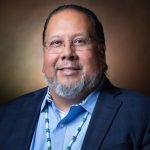
Governor, Gila River Indian Community of Arizona
Stephen Roe Lewis was raised in Sacaton, “Gu-u-Ki”, on the Gila River Indian Community. His father is the late Rodney Lewis and mother Willardene Lewis. Mr. Lewis has a son, Daniel currently attending Arizona State University.
Mr. Lewis is in his fourth term serving as Governor of the Community, having previously served as Lt. Governor. Prior to serving in elected leadership, Governor Lewis served the Community as a member of the Board of Directors for the Gila River Healthcare Corporation, as a Gaming Commissioner for the Gila River Gaming Commission, and as a member of the Board of Directors for the Gila River Telecommunications, Inc..
Stephen Roe Lewis graduated from Arizona State University with a Bachelor’s of Science and pursued graduate studies at John F. Kennedy School of Government at Harvard University.
Governor Lewis currently oversees the implementation of the Community’s Water Settlement of 2004 (at that time the largest water settlement of its kind in United States history). Governor Lewis advocates for renewable and green technologies guided by O’odham agricultural history and cultural teachings. Governor Lewis’s vision is to support a new generation of Community member agriculturalists with the goal of promoting and protecting the Community’s shudag (water) and agricultural development.
During his tenure as Governor of the Gila River Indian Community, Governor Lewis has brought innovative solutions to long-standing issues that will create long-term gains for the Gila River Indian Community One of these projects, Management Aquifer Recharge sites, brings together the need for access to water while restoring the return of the Community’s riparian area which is vital for farming and the return of wildlife to the Community. Governor Lewis also oversaw the development of the Solar-Over-Canal project which is the first of its kind in the Western Hemisphere. The Community broke ground on this project in 2023 and will generate power and reduce evaporation thereby conserving water. Bringing back the Gila River and water conservation projects, are critical to the culture and identify of the Gila River Indian Community, and have been key milestones during Governor Lewis’ Administration and one that will lay the foundation for future projects across the Community.
In addition, Governor Lewis’ innovation can be seen in his approach to providing educational opportunities for the youth of the Gila River Indian Community. The Community was the first tribal community in the Nation to utilize the Indian Self-Determination and Education Assistance Act to create a program that revolutionized how infrastructure is constructed and maintained throughout Indian Country. This program, the Section 105(1) program was utilized for education construction in the Community, and the Community is working to expand the uses of the program to other infrastructure in the Community and throughout Indian Country.
Governor Lewis has also prioritized the Community’s Veterans and youth by working to establish the Community’s first Veteran’s and Family Services Department. In 2023, the Community received accreditation as a Veterans Service Organization, only the second to receive such accreditation in Indian Country. Governor Lewis has also committed resources to protect the Community’s children by advocating for the protection of the Indian Child Welfare Act both at home and nationally.
Governor Lewis serves as President of the Arizona State University’s American Indian Policy Institute Board of Directors, on the Executive Board for the National Indian Gaming Association (NIGA), and on the Board of Trustees for the Heard Museum of Phoenix.

Founder and Managing Partner, Spirit Rock Consulting, Inc.
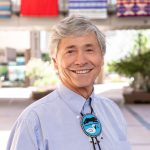
Jonathan and Wendy Rose Professor of Law and Faculty Director of the Rosette LLP American Indian Economic Development Program, ASU Law
Robert J. Miller’s areas of expertise are Federal Indian Law, American Indians and international law, American Indian economic development, Constitutional Law, and Civil Procedure. He is an enrolled citizen of the Eastern Shawnee Tribe, the Chief Justice for the Pascua Yaqui Tribe Court of Appeals, and he sits as a judge for other tribes. Bob is the Jonathan and Wendy Rose Professor of Law, and in 2019-24 he was the Willard H. Pedrick Distinguished Research Scholar. He is also the Faculty Director of the Rosette LLP American Indian Economic Development Program at ASU.
In 2014, Bob was elected to the American Philosophical Society. In 2024, he was elected to the Governing Council of the Society. The APS is the oldest learned society in the United States and was created by Benjamin Franklin in 1743 for “promoting useful knowledge.” Thomas Jefferson served as president of the APS for seventeen years overlapping his time as president of the United States. The APS has only elected about 5,800 members in its 280 year history.
Before joining ASU in 2013, Miller was on the faculty of Lewis & Clark Law School from 1999-2013. Prior to his career in academia, he practiced Indian law with Hobbs, Straus, Dean & Walker, and litigation with the Stoel Rives law firm. Following graduation from law school, he clerked for Judge Diarmuid O’Scannlain of the U.S. Court of Appeals for the Ninth Circuit.
Professor Miller’s scholarly works include articles, books, book chapters, and editorials on a wide array of Federal Indian Law issues and he speaks regularly on these issues across the U.S. and in other countries. He is the author of “Native America, Discovered and Conquered: Thomas Jefferson, Lewis and Clark, and Manifest Destiny” (Praeger 2006), and “Reservation ‘Capitalism’: Economic Development in Indian Country” (Praeger 2012). He co-authored “A Promise Kept: The Muscogee (Creek) Nation and McGirt v. Oklahoma (University of Oklahoma Press 2023); “Creating Private Sector Economies in Native America: Sustainable Development through Entrepreneurship” (Cambridge University Press 2019); and “Discovering Indigenous Lands: The Doctrine of Discovery in the English Colonies” (Oxford University Press 2010). Professor Miller has worked as a consultant with the American Philosophical Society since 2006 on tribal language and archival issues. He was elected to the American Law Institute in 2012.
Education
- J.D. Lewis & Clark Law School 1991
- B.S. Eastern Oregon University 1988
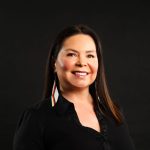
General Manager, Mohawk Networks, LLC
Allyson Mitchell is the General Manager of Mohawk Networks, LLC, a tribally-owned ISP under the Saint Regis Mohawk Tribe’s Section 17 Holding Company. Allyson leads a dual-mission enterprise: delivering critical broadband to the Akwesasne territory and scaling a sophisticated government contracting vertical specializing in IT and telecommunications. Under her leadership, Mohawk Networks operates as an SBA-certified 8(a) and HUBZone entity, offering federal partners unique procurement advantages and technical excellence.
A recognized voice in national policy, Allyson serves as Vice-Chair of the FCC’s Native Nations Communications Task Force and sits on the Board of Directors for the Native American Contractors Association (NACA). She is also the Managing Partner of the Aecon-Mohawk Networks Joint Venture, an Indigenous-led powerhouse dedicated to bridging the digital divide through large-scale middle-mile and last-mile infrastructure. Allyson’s work is rooted in digital sovereignty, ensuring that connectivity is built for—and by—Indigenous communities.

Director, Community Broadband Networks Initiative, Institute for Local Self-Reliance (ILSR)
Christopher Mitchell is the Director of the Community Broadband Networks Initiative with the Institute for Local Self-Reliance (ILSR) in Minneapolis. Mitchell is a leading national expert on community networks, Internet access, and local broadband policies.
Mitchell built CommunityNetworks.org, the comprehensive online clearinghouse of information about local government policies to improve Internet access. Its interactive community broadband network map tracks more than 600 such networks. He also hosts audio and video shows online, including Community Broadband Bits and Connect This!
With Matthew Rantanen and many others who generously shared their time and expertise, Christopher Mitchell co-founded the Tribal Broadband Bootcamp events that have worked with people from more than 75 Tribes across North America and well over 400 participants since 2021.
Public Knowledge presented Christopher with its Internet Protocol award in 2021, which honors those who have made significant contributions to Internet policy. In 2019, the Coalition for Local Internet Choice gave Mitchell its “Indispensable” Award and the Blandin Foundation of Minnesota presented him with a “Courageous Leadership” award. In 2015, the White House used Mitchell’s research as building blocks in a National Economic Council report encouraging community networks. He was honored as one of the 2012 Top 25 in Public Sector Technology by Government Technology, which honors the top “Doers, Drivers, and Dreamers” in the nation each year. Christopher helped to found Next Century Cities and served as Director of Policy for its first five years.
He is on Blue Sky at bsky.app/profile/sportshotchris.bsky.social
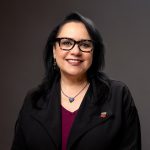
Executive Director of the American Indian Policy Institute & Research Professor, ASU Law
As a member of the Chickasaw Nation of Oklahoma, Traci Morris is a leading scholar on the subject of Tribal Digital Sovereignty, a term coined by Morris. Morris is an expert in tribal broadband and access and testified at the Federal Communications Commission and Capitol Hill.
Since 2014, Morris has been the executive director of the American Indian Policy (AIPI) Institute and is a research professor at the Sandra Day O’Connor College of Law. Under her guidance, the AIPI has expanded its services to Indian Country, collaborating with prominent organizations such as the National Congress of American Indians, and more. She currently serves on the Arizona Governor’s Office Interagency and Community Broadband Advisory Council.
Morris has worked with Native American nations, Tribal businesses, and non-profits. Her research and publications have focused on Internet use, digital inclusion, network neutrality, digital equity, and the development of broadband networks in Indian Country.
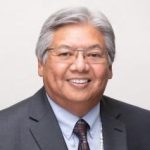
Vice President and Special Advisor to the President on American Indian Affairs, ASU
Jacob (Lakota, Dakota, Akimel O’odham, and Tohono O’odham) began in the role of Vice President and Special Advisor to the President on American Indian Affairs on July 1, 2023. Jacob advises the University on programming and initiatives that are designed to help improve outreach, retention and graduation rates of our American Indian students. He brings with him years of experience in tribal government, economic development, health policy, banking, gaming, and nearly a decade at the Arizona State Board of Education.
Moore serves on the board of directors for the Arizona Community Foundation, ASU Morrison Institute, WestEd, Arizona Minority Education Policy Analysis Center, Xico and Tohono O’odham Gaming Enterprise. He is a senior global futures scholar with the Julie Ann Wrigley Global Futures Laboratory and a health solutions ambassador with ASU’s College of Health Solutions. Moore started at ASU in 2007. He is the former associate vice president of tribal relations in the Office of Government and Community Affairs at ASU. He was responsible for the intergovernmental affairs between ASU and tribal nations and communities.
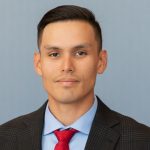
Third-year Law Student, ASU Law
Justice Oglesby is a third-year law student at the Sandra Day O’Connor College of Law at Arizona State University and is a member of the Navajo Nation. He is part of the Indian Legal Program and actively engaged in advancing his understanding of federal Indian law, tribal governance, and community advocacy. His academic and professional experiences reflect a strong commitment to serving Native communities and contributing to the development of just, culturally grounded legal systems.
Throughout law school, Oglesby has participated in ILP programming, community events, and opportunities that strengthen his practical skills and deepen his connection to Indian Country legal issues. He brings a thoughtful, grounded perspective to his work and is dedicated to using his legal education to support tribal sovereignty and future generations.
Justice is currently a First Lieutenant in the United States Army serving as a staff officer in a transportation battalion in the Arizona National Guard.
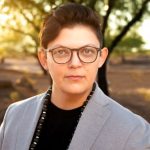
Third-year Law Student and Research Assistant, ASU Law
Samantha “Sam” Phillips is a citizen of the Cherokee Nation from Tahlequah, located on the Cherokee Nation Reservation in present-day Oklahoma. Sam earned dual bachelor’s degrees in Legal Studies and American Indian Studies, with a concentration in Sovereignty, Health, and Current Issues, from Northeastern State University. Before entering law school, Sam served in the United States Marine Corps and later built a career in the private tech sector. In 2017, Sam transitioned to Tribal government service, working across Cherokee Nation agencies in gaming regulatory compliance, information systems security, and health business operations. Sam is now a J.D. candidate at the Sandra Day O’Connor College of Law at Arizona State University, where they focus on federal Indian law, Tribal sovereignty, and emerging issues in Tribal digital governance.

Partner, Catalyst Influence Management
Porter is known across the country as one of the leading government relations’ professionals in his field. He has cultivated a vast personal network of government officials, their senior staff and the thought-leaders who shape public opinion with over a decade of experience in public service, politics and government relations at the federal, state and local levels.
As a Partner at one of the fastest growing influence management firms in the country, Porter’s achievements range from helping clients defeat unnecessary and burdensome regulations, tripling the membership of leading national trade associations and launching effective public policy programs for organizations of every size.
Porter helped lead a successful bipartisan government relations coalition on behalf of clients in the financial technology industry to stop an initiative by the Justice Department that was cutting off financial services to legal industries known as “Operation Choke Point.”
Working on behalf of Native American tribes, Porter has connected tribal leaders with state attorneys general to create a more positive and collaborative working environment between tribes and regulators. His successes include the signing of a Memorandum of Understanding (MOU) between state and tribal clients.
Cultivating an indelible brand and public image for his clients is a key priority for Porter who seeks to build long-term success, relationships and opportunities that can be sustained beyond their engagement with CATALYST. He is committed to the long-term growth and influence of CATALYST through his key role as a Partner for business development and company management to ensure his clients constantly have new opportunities for partnerships and growth.
Porter began his career with U.S. Senator Jim Talent and has served in leadership positions on several high-profile campaigns and party organizations in California and across the country, including two presidential campaigns. He has managed multi-million dollar budgets, led fundraising efforts that have raised hundreds of thousands of dollars for clients, testified before state legislatures on policy issues and serves in the leadership of a diverse group of organizations and boards.
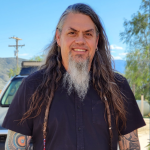
Director of Technology, Southern California Tribal Chairmen’s Association (SCTCA) and Director, Tribal Digital Village (TDVNet) Network/Initiative
Matthew Rantanen is a nationally recognized leader in Tribal broadband, digital sovereignty, and community‑driven network development. For 25 years, he has served as the Director of Technology for the Southern California Tribal Chairmen’s Association (SCTCA) and Director of the Tribal Digital Village (TDVNet) Network/Initiative, where he has designed and expanded broadband infrastructure supporting 25 Tribal Nations across Southern California.
Rantanen is the Co‑Founder of the Tribal Broadband Bootcamp, now in its fifth year, a hands‑on training program that has strengthened technical capacity for Tribal communities nationwide. He also spent four years as Vice President of Tribal Relations at GoldenStateNet, helping guide Tribal engagement in California’s statewide middle‑mile broadband initiative.
A respected national policy voice, Rantanen has served 13 years as Co‑Chair of the National Congress of American Indians’ Technology and Telecom Subcommittee and seven years on the FCC’s Native Nations Broadband Task Force. He has also contributed nine years of service as a board member of the American Indian Policy Institute and a decade as Board Chair and Treasurer of Native Public Media, supporting media access and communications rights across Indian Country.
Widely known as a “cyber warrior for Tribal community networking,” Rantanen continues to champion equitable broadband access, open spectrum, and Tribal digital sovereignty, working to ensure Native Nations have the infrastructure, skills, and autonomy needed to thrive in a connected world.
https://www.linkedin.com/in/matthewrantanen/
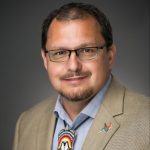 Ernie Rasmussen
Executive Director, Bigfoot Communications
Ernie Rasmussen, Citizen of the Oneida Nation of Wisconsin, is currently serving as the Executive Director for Bigfoot Communications of the Confederated Tribes of the Colville Reservation. Among his duties is to marry broadband infrastructure investments with much needed broadband services while balancing digital equity services in a green field broadband development. Mr. Rasmussen is currently serving as the Vice Chair (delegate) to the FCC Intergovernmental Advisory Committee. He is an experienced panelist on a number of Tribal Economic Development issues, most recently as it is related to Broadband and its impacts, both positive transformations and as cautionary challenges, in Indian Country. Mr. Rasmussen works closely with a number of national level policy development orgs, including the Fiber Broadband Association as a Policy Committee member and Tribal Committee Co-Chair; the Schools Hospitals and Libraries Broadband Coalition, sponsoring a Tribal Member Board Rep through Bigfoot Communications and the Colville Tribes; Golden State Net as a Tribal voice on the Board of Advisors; working closely with Public Knowledge as an advocate for greater Tribal opportunity in Federal Telecomm Policy Development; a driving force behind the development of the Inland Northwest Tribal Broadband Coalition working to share resources to strengthen member Tribes; and 2025 Innovator Award Winner at the North Central Washington Tech Alliance. Mr. Rasmussen continues to work to inform Federal Policy in support to Tribal Sovereignty, Tribal Opportunity, and Tribal Rights to Self Determine on many fronts. Ernie has spent his entire 30-year career in service to Tribes, including as Tribal Liaison at the Washington State Department of Commerce, Digital Equity Manager at the Washington State Broadband Office, Senior Planner of Economic Development for the Colville Tribes, Executive Director of a 501c3 on the Spokane Indian Reservation, a College Math Instructor at a Tribal College, and a GED instructor. He currently serves on many national and regional boards and committees, always serving to remind his colleagues of the importance of partnership with Tribal communities. His wife, Amy is a Spokane Tribal member and together they have 3 beautiful and supremely talented daughters and two amazing grandchildren offering a 7th Generation perspective to all things Rasmussen Family.

President, Mohegan Digital
Rich Roberts serves as President of Mohegan Digital, where he has led the launch and expansion of the company’s digital gaming business across Connecticut, Pennsylvania, and Ontario since 2021. In this role, Rich oversees day-to-day operations and drives financial planning to ensure sustainable growth and innovation in the digital space.
With over 25 years of experience in gaming and digital entertainment, Rich has held leadership positions at Slingo, Viacom, Atari, and Hasbro, where he played a pivotal role in building and scaling their digital gaming businesses. Prior to joining Mohegan, Rich spearheaded sports betting initiatives at New England Sports Network, bringing new wagering opportunities to the New England market.
Rich also served as President of Digital for Sportech, where he managed the company’s ADW product and partnered with NYX to develop the platform that enabled Mohegan and Resorts to launch iGaming in New Jersey in 2014–2015. His extensive background in both gaming and technology positions him as a key voice in shaping the future of digital gaming.
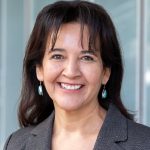
Assistant Dean, Community Engagement and Executive Director of Indian Legal Program, ASU Law
Rosier is the Assistant Dean of Institutional Progress and the Executive Director of Indian Legal Program (ILP) at the Sandra Day O’Connor College of Law at Arizona State University. She is an enrolled member of the Comanche Nation of Oklahoma. In this role Rosier leads the ILP’s recruitment and retention efforts and is in charge of the ILP’s development and grant work. Rosier served as Director of the ILP from 2000-2011 and returned as Executive Director in 2014. During her three-year absence from the ILP Rosier served as an Assistant General Counsel for the Fort McDowell Yavapai Nation. Prior to joining ASU, she worked as a tribal prosecutor for the Gila River Indian Community. Rosier received her J.D. from the University of Utah in 1998 and a BA from Capital University in 1993.
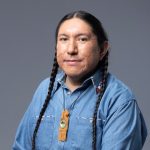
Co-Founder and Lead Architect First Languages AI Reality at Mila/IndigiGenius
Michael Running Wolf (Northern Cheyenne and Lakota) was raised in a rural prairie village in Montana with intermittent water and electricity; naturally he has a Master’s of Science in Computer Science. Michael was an engineer at Amazon’s Alexa, former faculty at Northeastern University, and is a researcher at Mila. Michael is researching Indigenous language reclamation using immersive technologies and artificial intelligence. His work has been awarded a MIT Solve Fellowship, the Alfred P. Sloan Fellowship, the Centri Tech Social Justice Innovation Award, and the Patrick McGovern AI for Humanity Prize. Through the ethical application of AI and advanced technology respecting traditional ways of knowing he is contributing to the ecology of thought represented by the Indigenous.
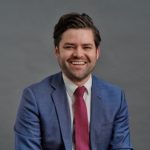
Under Secretary, Technology & Innovation, The Chickasaw Nation
Chris Shilling was born and raised in Yukon, Oklahoma. He serves as the Chickasaw Nation’s Under Secretary of Technology and Innovation. Mr. Shilling manages the technology support teams, which includes the hospitality, health care and government services industries. He also leads the budgeting and capital planning teams for the department of commerce. Formerly, he was the chief operating officer (COO) at the Stephenson Cancer Center in Oklahoma City, followed by a brief stint at a technology software startup based in Southeast Asia.
Mr. Shilling received a Bachelor of Arts in psychology from the University of Oklahoma and a Master of Business Administration from the Harvard Business School. He is a co-chair of the American Cancer Society Hope Lodge, a free hotel for cancer patients traveling to Oklahoma City for cancer care. He is on the advisory board for several early-stage investment companies and actively mentors those who work at early-stage ventures in the state. Mr. Shilling is the very proud father of two children.
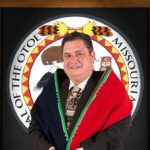
Chairman, Ottoe-Missouria Indian Tribe
John R. Shotton is the current Chairman of the Otoe-Missouria Tribe of Indians. He has served in that capacity since being elected in November 2007. Prior to being elected to the office of Chairman, he served on the Tribal Council as the First Member for two years.
Chairman Shotton holds a Bachelor of Business Administration and a Master of Public Administration Degree from the University of Oklahoma. Prior to serving the Otoe-Missouria Tribe, Chairman Shotton worked for the University of Oklahoma’s American Indian Institute developing and administering programs for tribes across the United States.
In 2012, Chairman Shotton was recognized as one of the “Native American 40 under 40” by the National Center for American Indian Enterprise Development.
Chairman Shotton is a member of the Owl Clan and belongs to the Otoe Eloska Society as well as the Red Rock Creek Gourd Dancers. John is married to Dr. Heather Shotton and they have two daughters, Sloan and Sophie Shotton.
 Grace Signorelli-Cassady
Attorney, Jenner & Block LLP
Grace Signorelli-Cassady is a member of Jenner & Block LLP’s Native American Law Practice, where she leans on her experience in high-stakes litigation, sensitive investigations, and as a former federal law clerk to deliver significant victories for tribal clients. She secured an over $100 million trial victory on behalf of a federally recognized Indian tribe in an oil lease dispute, successfully defended that win throughout a legal challenge, and then added another $10 million victory in a related dispute. Beyond litigation, Grace has also worked on a variety of tribal energy matters, including guiding a tribe’s pursuit of energy sovereignty and independence and advising on lease and rights-of-way negotiations. Prior to joining Jenner & Block, Grace served as a federal law clerk to the Honorable Roslyn O. Silver of the US District Court for the District of Arizona.

Professor, L. Robert Payne School of Hospitality & Tourism Management, San Diego State University and Endowed Chair, Sycuan Institute on Tribal Gaming
Dr. Kate Spilde is a leading authority on the social and economic impacts of tribal government gaming on communities with extensive research and practical experience in American Indian economic development in the United States. With a Ph.D. in cultural anthropology and an MBA in entrepreneurial management, Dr. Spilde’s work focuses on providing support to tribal governments who use casino gaming revenues for nation (re)building efforts.
As Professor and Endowed Chair at San Diego State University (SDSU), Dr. Spilde is responsible for teaching and managing the nation’s first four-year degree program in tribal casino operations management. She also serves as a Board Member for the International Center for Responsible Gaming.
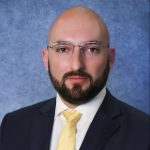
In-House Counsel, Morongo Band of Mission Indians
Max Spivak serves as In-House Counsel for the Morongo Band of Mission Indians, a federally recognized Tribe. Max’s work for Morongo’s community, government, and enterprise stakeholders spans several practice areas for the ultimate purpose of protecting and advancing Tribal sovereignty.
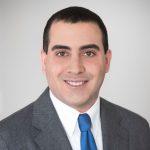
Partner, Rosette, LLP
Brett joined Rosette, LLP in 2013. His practice focuses on litigation, largely in cases involving issues of e-commerce, jurisdiction, tribal government matters, torts, and federal statutory claims. Brett has represented parties in federal, state, and tribal court, as well as arbitrations throughout the country. He has also worked on numerous U.S. Supreme Court matters, drafting amicus curiae briefs in important cases involving issues of immunity and treaty interpretation.
In addition to his litigation practice, Brett also provides general counsel services, advising clients on difficult legal issues affecting tribal governments and their business entities. He often works on federal regulatory matters, monitoring agency actions and analyzing the impact that such activity can have for clients. He routinely submits comments on federal agency action to defend client interests throughout the administrative rulemaking process.
Prior to joining the firm, Brett worked as a law clerk for the Office of the General Counsel for the Salt River Pima–Maricopa Indian Community and was a judicial extern at the Arizona Court of Appeals. In law school, he served as Executive Managing Editor of the Arizona State Law Journal.
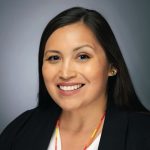
Assistant Director, Indian Legal Program, ASU Law
Kristen Talbert is the Assistant Director of the Indian Legal Program at Arizona State University. An enrolled member of the Sisseton-Wahpeton Oyate, Kristen brings over fifteen years of experience in nonprofit leadership, case management, data collection, teaching, and program development.
Her career has focused on advancing the Indian Child Welfare Act and connecting American Indian families with resources that support long-term success. She has served as the St. Paul Urban Representative for the Indian Child Welfare Advisory Council at the Minnesota Department of Human Services and as a member of the Indian Education Advisory Council for the Arizona Department of Education. Kristen is currently a premier academic coach for the Native Forward Rising Native Graduates Program.
She earned her MBA with an emphasis in leadership and entrepreneurship from ASU’s W.P. Carey School of Business, an MA in K–12 Education with a focus on Indigenous language immersion from the University of St. Thomas, and a BA in American Indian Studies—Dakota Language Track from the University of Minnesota–Twin Cities.
In 2023, Kristen was honored with the NCAIED 40 Under 40 award for her leadership and impact in Native communities.
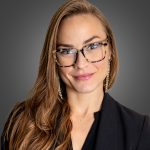
Vice President, Market Strategy, Colusa Indian Energy
Maggie is an accomplished energy leader with over a decade of experience developing and marketing 3 GW of solar and battery storage projects across multiple markets. She specializes in interconnection, power marketing, and energy policy, holding key roles at Navajo Power, Ranger Power, and the Coalition of Communities of Color, where she helped establish the $400 million Portland Clean Energy Fund. She serves as Co-Chair of the ATNI Energy Committee and Chair of the NCAI Energy & Mineral Policy Subcommittee, advocating for Indigenous energy sovereignty. A Citizen of the Cherokee Nation, Maggie holds degrees from Yale and Wellesley and is committed to advancing energy and economic opportunities in Indian Country.
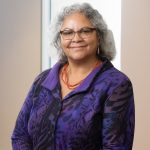
Partner, Quarles & Brady LLP
Pilar Thomas advises Native American tribes on tribal renewable energy project development and finance, tribal economic development, federal Indian law and natural resource development. Clients turn to her for strategic legal advice on:
- Tribal energy policy and planning
- Clean energy and infrastructure project development and financing
- Federal and state energy regulatory, programs and policy efforts
- Federal requirements for tribal land development
Pilar’s in depth federal Indian law experience extends to her governmental work as deputy director for the Office of Indian Energy Policy and Programs at the U.S. Department of Energy. She was responsible for developing and implementing policies and programs to achieve the office’s objectives related to the promotion of energy development, electrification and infrastructure improvement on tribal lands.
Pilar also was the deputy solicitor of Indian Affairs for the U.S. Department of the Interior interim attorney general, chief of staff to Chairwoman Herminia Frias of the Pascua Yaqui Tribe and a trial attorney in the U.S. Department of Justice, Environmental and Natural Resources Division, Indian Resources Section.

Tribal Ambassador, Habematolel Pomo of Upper Lake and President, Habemco LLC
Sherry Treppa is the former Chairperson of the Habematolel Pomo of Upper Lake, a federally recognized Indian Nation in Upper Lake, California, serving as an elected
official from 2004-2024, and as the Chairperson since 2008.
Treppa is the president of Habemco, the Tribe’s wholly owned shared services business. She also serves as ambassador to the Tribe allowing her to continue her outreach and advocacy work on behalf of the Tribe and its interests.
While tasked with preserving the Tribe’s Pomo culture, Treppa continues to lead efforts striving for economic self-reliance through e-commerce, gaming, and other economic opportunities within the Tribe’s jurisdiction. Her leadership has positioned the Tribe at the forefront of emerging sectors, from digital sovereignty to biofuels—demonstrating how Tribal Nations can drive innovation, sustainability, and equity in national policy.
As an experienced tribal leader committed to Native American interests and the mission of economic growth, Treppa is often called upon to testify at legislative hearings for a variety of issues impacting Indian Country.
In 2024, Treppa was appointed Co-Chair of the National Congress of American Indians’ (NCAI) Technology Task Force as well as Board Member of the American Indian Policy Institute (AIPI), a college-level unit within Arizona State University ‘s (ASU) Sandra Day O’Connor College of Law. Notably, through collaboration between NCAI and ASU, AIPI launched the Center for Tribal Digital Sovereignty in June 2024. Treppa continues to shape national discussions on Tribal digital sovereignty and broadband infrastructure, helping position Tribal Nations as co-equal partners in shaping the future of digital governance and economic development.
Treppa was also appointed to the Federal Communications Commission’s (FCC) Native Nations Communications Task Force in 2024, which was created to provide guidance, expertise and recommendations to specific requests from the FCC on a range of telecommunications issues that directly or in directly affect tribal governments and their people.
She was awarded the 2021 Tribal Chairperson of the Year by Native American Finance Officers Association (NAFOA), a respected national tribal organization focused on growing tribal economies and strengthening tribal fi nance. Congressman Mike Thompson (CA-4) named Treppa Lake County’s 2023 Woman of the Year recognizing her contributions not only to her Tribe but to the county and surrounding community.
In 2019 Treppa and her Tribe co-produced “Saving the Sacred” a short documentary nominated for an Emmy on development of a Memorandum of Agreement (MOA) with other local Sovereign Tribal Governments and the County of Lake for protection of sacred sites and artifacts. This work earned the California State Governor’s Historic Preservation Award in 2016.
Prior to her role with the Tribe, Treppa worked in private industry for 18 years. She was born in Lake County and graduated with a Bachelor of Science from the University of
San Francisco. Treppa’s ongoing e orts have contributed to the process of restoring the Tribe’s land base. She has spearheaded funding negotiations and refinancing for the Tribe’s current gaming ventures. She played a vital role in overseeing the construction of the Tribe’s Casino and represented the Tribe in raising capital, structuring and development of the Tribe’s e-commerce and biofuel businesses.

Senior Fellow, Governance Studies; Director, Center for Technology Innovation (CTI) at Brookings
Nicol Turner Lee is a senior fellow in Governance Studies, the director of the Center for Technology Innovation (CTI), and serves as co-editor-in-chief of the TechTank blog and The TechTank Podcast. Her research focuses on the intersection between technology and social justice in areas that range from universal access to communications to the design and application of artificial intelligence models. In 2023, Turner Lee developed and launched the AI Equity Lab, which is focused on advancing inclusive, ethical, nondiscriminatory, and democratized AI models and systems throughout the United States, and the Global South, including the African Union, India, Southeast Asia, the Caribbean, and Latin America.
Alongside her plethora of publications, Turner Lee released her first, signature book Digitally invisible: How the internet is creating the new underclass (2024), which advances a roadmap toward a more just, digital society and economy. She also recently published a chapter in The Oxford Handbook on AI Governance (2022), among other notable publications.
She has been a contributor to the Washington Post, New York Times, Wall Street Journal, Politico, Communications Daily, National Journal, The Hill, among others. She has been seen and heard on PBS Newshour, National Public Radio, NBC, ABC, and other major and multicultural and independent media outlets and podcasts. Turner Lee is also a regularly sought out speaker, and panelist for congressional, state, and local hearings on existing and next generation technologies.
She sits on various federal advisory commissions some of which include the Technology Advisory Committee on the U.S., Commodities and Futures Trading Commission (CFTC), NYDFS Financial Innovation Advisory Board, the AI Safety Board convened by the U.S. Department of Homeland Security, and the Federal Communications Commission’s Communications, Equity, and Diversity Council (CEDC) of which she is the current vice chair. She is also an active board member on the Federal Communications Bar Association Foundation, and the Partnership on AI, which is a global organization committed to ethical and safe AI. In addition to these roles, she is also a member of the Observatory on Information and Democracy and has actively participated in various global discussions on universal connectivity and responsible future technologies. In 2023, she also completed service on the National Academies of Science research commission on the use of facial recognition technologies in policing as per an executive order from the Biden-Harris administration.
Prior to Brookings, Turner Lee was chief research and policy officer at the Multicultural Media, Telecom, and Internet Council (MMTC), and the first director of the Media and Technology Institute at the Joint Center for Political and Economic Studies. In the latter role, she developed the first national minority broadband adoption study, which was later cited in the congressionally mandated Federal Communications Commission’s National Broadband Plan. In 2022, Turner Lee was recognized with the Distinguished Career Award in the practice of sociology by the American Sociological Association, which adds to other notable recognitions, including being named to the list of the top 100 Women in AI Ethics and given the Lifetime Achievement Award by the Rainbow PUSH Coalition. Turner Lee graduated from Colgate University magna cum laude and has a M.A. and Ph.D. in sociology from Northwestern University. She also holds a certificate in nonprofit management from the University of Illinois-Chicago.
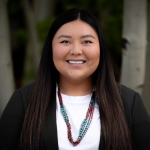
Senior Research Fellow, Tribal Water Policy, Kyl Center for Water Policy, ASU
Cora Tso is an enrolled member of the Navajo Nation. She is of the Reed People clan and born for the Black Streaked Wood clan. Her maternal grandparents are of the Bitterwater clan and her paternal grandparents are of the Red House clan. She was born and raised on the Navajo reservation and is originally from Shonto, Arizona, located in northeastern Arizona. Cora currently works at Arizona State University (ASU)’s Kyl Center for Water Policy at Morrison Institute as a Senior Research Fellow. In this role, Cora develops research and policy analysis for Arizona Tribal water policy in collaboration with various water stakeholders in Arizona and the Colorado River Basin in connection with the Arizona Water Innovation Initiative (AWII). Previously, Cora has worked with governmental, private and non-profit organizations focusing on Indian law, water law and environmental law and policy matters. She holds a Bachelor of Science in Political Science, a minor in American Indian Studies and a Juris Doctor degree from Arizona State University. She is passionate about using her education and profession to secure and protect Tribal rights to lands and waters in the Southwest.
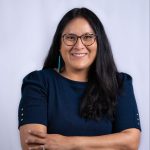
Assistant Professor, School of Life Sciences, ASU
Dr. Krystal Tsosie (Diné/Navajo Nation), PhD, MPH, MA, is an Indigenous geneticist-bioethicist and Assistant Professor in the School of Life Sciences at Arizona State University. Her work advances Indigenous health, artificial intelligence, and Tribal digital sovereignty, with a focus on governing emerging data-driven technologies in ways that uphold Indigenous rights, community control, and self-determination.
Dr. Tsosie is a nationally recognized advocate for Indigenous data and genomic sovereignty and is a co-founder of the Native BioData Consortium, the first U.S. Indigenous-led biobank. Her research integrates population genetics, public health, bioethics, and data science to address health inequities while embedding Indigenous governance principles—such as data ownership, dynamic consent, and accountability—directly into research and AI systems.
Her recent work emphasizes “sovereign by design” approaches to AI in health, including federated machine learning models that enable privacy-preserving collaboration without relinquishing Tribal authority over data. Her work has received national and international recognition, and she serves in policy and advisory roles with the American Society of Human Genetics, the National Academy of Medicine, and ENRICH.

Attorney, Williams Law Group
John Williams has over 30 years experience in American Indian, business transaction, corporate and energy law. He has worked for large and small corporations, large law firms and recently decided to form his own law firm in February, 2018 dedicated solely to Native American issues. John focuses on business transactions, energy development, tribal law, tribal corporate structure, and regulatory law.
John brings an excellent blend of legal, technical and business expertise. He began his professional career as a reservoir engineer with a leading oil and gas corporation. Later, he returned to law school where he specialized in Native American and natural resources law. During an internship with the Bureau of Indian Affairs, John wrote a model environmental code for use by tribal governments. This experience provided the basis for his first publication, The Effect of the EPA’s Designation for the Tribes as States on the Five Civilized Tribes in Oklahoma. Additionally, he drafted the Cherokee Nation’s original environmental code. Using his diverse background, John was also a contributing author for the Resources for the Future study which analyzed the renewable energy policies of the 17 most populous states. His experience with corporate structure and the interplay of business and tribal culture contributed to the article Paving the Way for the Future: Potential Structures for Tribal Economic Development and to several presentations of “When Worlds Collide: The Collision of Tribal and Corporate Culture.” He has also served as a contributing author to the Encyclopedia of American Indian History.
John gained in-depth energy expertise as an attorney and business development manager for a leading energy corporation and has practiced before the Federal Energy Regulatory Commission (FERC) and the Comisión Reguladora de Energía in Mexico. His diverse experience in energy matters involved such areas as FERC regulated pipelines, power generation and transmission, energy marketing, and FERC compliance. He has applied his energy, business and regulatory expertise to projects in Indian Country where, among other projects, he permitted a large power plant on tribal trust land. He has represented both companies doing business with tribal nations and tribes and tribally owned businesses. John’s firm current serves as outside general counsel to a tribal nation in California which provides John with insight to the myriad of issues for tribal businesses and governments.
John earned his Bachelor of Science degree in Chemical Engineering in 1988 from The University of Tulsa graduating cum laude. He also earned his Juris Doctor degree in 1992 from The University of Tulsa. In law school, John was awarded both the Eastern Mineral Law Foundation and the Rocky Mountain Mineral Law Foundation scholarships. He was also one of the first recipients of the University of Tulsa College of Law Indian Law Certificate. John served on the Energy Law Journal as managing editor for ABA publications. John served as adjunct faculty at the University of Tulsa College of Law in the American Indian and energy law programs including formerly serving as the interim head of The University of Tulsa’s Muscogee Creek Nation Legal Clinic. He has taught in the Masters of Jurisprudence program since the program’s inception teaching Principles of Federal Indian Law, Introduction to Federal Legal Administrative Systems, and Basic Oil and Gas Law.
John is a member of the Oklahoma Bar Association, the Federal Bar Association, the Pawnee Nation Bar Association and the Muscogee (Creek) Nation Bar Association. He is a graduate of Leadership Oklahoma and Leadership Tulsa and has served the community and the University of Tulsa in several leadership roles.
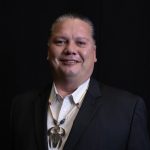
Executive Director, National Congress of American Indians (NCAI)
Larry Wright Jr. is the Executive Director for the National Congress of American Indians. He priorly served as the Director of Leadership Engagement for NCAI. He served as Tribal Chairman of the Ponca Tribe of Nebraska for eleven years, and was a member of the Tribal Council for four years prior to that service. During his time as Tribal Chairman, his Tribal Nation saw a period of important growth of their economic development ventures and health care facilities. While in office, Wright also served in the Great Plains Tribal Chairmen’s Association, representing his Tribe. He was also elected to represent the Great Plains Region as the NCAI Area Vice President for the NCAI Executive Committee, which is comprised of Tribal leaders from twelve separate regions across the nation.
Wright is a recognized national Tribal leader and advocate, familiar to many on Capitol Hill as well as many in every corner of Indian Country. He has testified before Congress on four occasions. In addition, Wright served on the Board of Directors of the National Indian Health Board, as Chairman of the Nebraska Commission on Indian Affairs Board of Directors, and as Chairman of the Nebraska Inter-Tribal Coalition. He also previously served as Co-Chair of the NCAI Taxation Subcommittee and the NCAI Trust Lands, Natural Resources, and Agriculture Subcommittee during his prior service on the Executive Committee of NCAI.
Wright is a military veteran and is dedicated to national advocacy on behalf of Tribal veterans, having served in the United States Army National Guard. He also has a diverse background in education, management, and entrepreneurship. For six years, he served as a Secondary Social Studies teacher in Lincoln Public Schools. He also owned and operated his own general contractor business.
Raised in Nebraska, Wright is the first member of his family elected to the leadership of his Tribal Nation. He graduated from the University of Nebraska at Kearney with a BA in Secondary Social Studies and Political Science, and from the University of Nebraska Wesleyan with an MA in Historical Studies.