
Featured speakers

Michael R. Arkfeld
Owner, Arkfeld & Associates, LLC
Michael Arkfeld is an attorney, author (Arkfeld on Electronic Discovery and Evidence treatise) and educator. Michael provides contemporary education, training and research for the legal concepts and technological issues involving electronic discovery and digital evidence. As a former assistant United States Attorney for the District of Arizona, Michael handled multimillion-dollar cases involving personal injury, medical malpractice, wrongful termination and a host of other tort claims. He has appeared before both federal and state appellate courts and has extensive experience in jury (over 30 trials) and bench trials. Michael lectures and consults throughout North America and internationally on the impact of technology to the practice of law and the discovery and admission of electronic evidence.
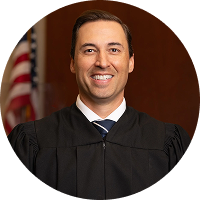
Judge Scott U. Schlegel
Judge, Louisiana Fifth Circuit Court of Appeal
Scott Schlegel was elected to the Louisiana Fifth Circuit Court of Appeal in 2023 after a decade as a district court judge. During his trial court service, he led a nationally recognized court modernization initiative that expanded online access to judicial services. He serves on the American Bar Association and Louisiana State Bar Association Task Forces on Law and Artificial Intelligence and on the National Center for State Courts Joint Technology Committee. Schlegel previously chaired the Louisiana Supreme Court Technology Commission and the Louisiana District Judges Association and received the National Center for State Courts’ William H. Rehnquist Award for Judicial Excellence.
All speakers
Lorem ipsum dolor sit amet, consectetur adipiscing elit. Ut elit tellus, luctus nec ullamcorper mattis, pulvinar dapibus leo.
Kate Baxter-Kauf is a partner at Lockridge Grindal Nauen PLLP based in Minneapolis, Minnesota. She primarily represents plaintiffs and classes in data breach, cybersecurity, and privacy class action litigation in federal and state courts across the country. She is currently named as co-lead interim class counsel in actions involving statutory claims involving disclosure of driver’s license and other private information, and related to invasion of privacy claims for sharing consumer and tracking information. She has argued at multiple district and appellate courts on issues related to Article III standing an is a steering committee member for the Sedona Conference Working Group 11 on Data Security and Privacy Liability.
Judge Maritza Dominguez Braswell serves as a United States Magistrate Judge in the District of Colorado. Her work focuses on the impact of artificial intelligence on litigation, courts and legal institutions. She co-chairs the District of Colorado’s AI Committee and helped launch the Judicial AI Consortium, a judges-only forum supporting cross-jurisdictional discussion of AI issues affecting courts. Braswell teaches Reimagining Justice: AI, Disruption and the Future Legal Leader and writes The AI Brief, a newsletter addressing AI developments relevant to the judiciary. Before joining the bench, she practiced complex commercial litigation, co-founded a technology-focused law firm and held leadership roles in the Colorado Attorney General’s Office.
Jerry Bui is a digital forensics expert specializing in computer forensics, technology-driven investigations and electronic evidence analysis. With more than two decades of experience, he supports complex civil litigation and regulatory matters and has testified more than 30 times on issues including spoliation, cloud data and forensic methodology. He advises organizations on emerging data sources, cloud platforms and eDiscovery workflows and frequently conducts forensic examinations and expert analyses. Bui also serves as an adviser to INTERPOL initiatives addressing the metaverse and synthetic media and supports international anti-corruption digital forensics training.
Liz Carrera is a Certified Records Manager, Information Governance Professional and Certified Information Professional. Her work focuses on information governance and records management program design, including risk-based implementation, defensible retention strategies and data minimization. She previously led global records and information governance for PayPal, where she supported enterprise data deletion and governance initiatives. Carrera now leads privacy and information management strategy within a large enterprise environment.
Clarissa Cerda is a national leader in artificial intelligence governance, biometric regulation and identity security. As chief legal officer and corporate secretary at Pindrop Security, she guides global legal strategy at the intersection of artificial intelligence, cybersecurity and fraud prevention. Cerda works with engineers, financial institutions and policymakers to design legal frameworks that address emerging risks such as synthetic media and voice impersonation. Her leadership focuses on aligning law, technology and public policy to strengthen identity protection and responsible artificial intelligence deployment. Earlier in her career, she advised the President of the United States and held leadership roles in the technology and legal sectors. She supports innovation and future-focused scholarship through her work with Arizona State University.
Shawn leads the Aerospace & Defense practice at Taft Law, leveraging his experience and passion for understanding complex technologies when advising clients in space law and government contracts. He was previously in-house for 27 years at Lockheed Martin and Teledyne.
John Christiansen has more than 30 years of experience in the legal discovery industry, working with eDiscovery software providers, service providers and digital forensics organizations. He holds certifications in Relativity, RelativityOne, Reveal and Brainspace. Christiansen has participated in The Sedona Conference and previously served on the California State Bar Executive Committee for the Law Practice Management and Technology Section. He regularly writes and speaks on discovery technology and practice.
Suzanne Clark works on complex litigation discovery involving electronically stored information, including large multidistrict and mass tort matters. Her work includes data management, review operations and technical discovery support. Clark is a Certified eDiscovery Specialist and has held Relativity Review Management Specialist recognition. She also earned a Mass Tort MDL Certificate from Duke University’s Bolch Judicial Institute and an Everlaw AI certification. She serves on the planning committee for the University of Florida College of Law E-Discovery Conference and on the board of the Complex Litigation E-Discovery Forum. Clark has also held leadership roles in ACEDS and regional bar organizations.
Anne K. Davis litigates complex investigations and high-stakes antitrust, consumer protection and securities matters in federal and state courts nationwide. She previously served as principal counsel for sales practice enforcement at the Financial Industry Regulatory Authority (FINRA), where she prosecuted violations of federal securities laws and industry regulations. Davis was part of the legal team in In re: Facebook Consumer Privacy User Profile Litigation, which resulted in a $725 million settlement. She has been named a National Trial Lawyers Top 100 Litigator from 2023 through 2025.
Ross Gotler advises on discovery law, technology and data strategy for complex litigation and investigations, including cross-border discovery and data privacy issues. He leads an information systems discovery and data intelligence team supporting large-scale disputes and investigations. A Fellow of Information Privacy, he is active in The Sedona Conference, including service on the Working Group 1 steering committee and Leadership Council. Gotler frequently writes and speaks on eDiscovery, legal data intelligence and the use of AI in discovery practice.
Sean Harrington leads applied research and development at the intersection of law and computer science, focusing on practical and responsible AI systems for legal practice. His work examines how emerging technologies reshape legal workflows, professional training and legal service delivery. Harrington has been recognized for advancing the integration of AI into legal education and was named a 2025 vLex Fastcase 50 honoree for innovation in the legal profession.
Ruth Hauswirth focuses on litigation data strategy and electronic discovery in complex litigation matters. Her work includes evidence preservation, data collection, review and production involving electronically stored information. She also advises organizations on enterprise information retention, disposition and governance programs, including policy development, regulatory compliance and implementation of data management frameworks. Her practice integrates legal technology and data analytics to support litigation and regulatory matters.
Robert Hoff represents companies and individuals in civil and criminal matters before federal and state regulators including the U.S. Department of Justice, Securities and Exchange Commission, Public Company Accounting Oversight Board, Commodity Futures Trading Commission, Internal Revenue Service and state attorneys general. He also litigates complex civil matters in federal and state courts nationwide. Rob founded and leads an eDiscovery and electronic data practice supporting litigation and investigations.
Tessa is a partner at Husch Blackwell and co-founder of the firm’s eDiscovery Solutions group, with more than three decades of experience leading complex litigation and regulatory matters. She advises organizations on discovery strategy, data governance and emerging technologies, including generative AI. Tessa leads large-scale review efforts, designs scalable legal hold processes and advances innovation in legal practice. She serves on the firm’s AI Committee and Diversity and Inclusion Committee, where she founded a mentoring program supporting diverse attorneys. Tessa teaches eDiscovery law, contributes to national thought leadership and is consistently recognized for excellence in information governance.
Jeff Johnson is a legal technology executive and eDiscovery specialist with more than 25 years of experience designing discovery workflows for complex litigation and investigations. He advises Fortune 500 corporations and Am Law 100 firms on defensible discovery strategy, AI-assisted document review and large-scale data analysis. His work includes technology-assisted review, continuous active learning, analytics and protocol validation. Johnson frequently evaluates discovery methodologies, designs review protocols and provides expert declarations and testimony regarding discovery processes, search methodology and AI-driven review systems.
Rose Jones focuses her practice on eDiscovery, data governance, cybersecurity and crisis management related to complex litigation, data breaches and government investigations. She is ranked in Chambers USA and Chambers Global for e-discovery litigation. Chambers notes her work advising organizations on discovery issues in government investigations, while Legal 500 highlights her experience coordinating legal, privacy and information governance teams in complex matters.
Brian Morrison advises on discovery strategy across a global corporate litigation docket and collaborates with information governance and engineering teams on retention and preservation policies. Prior to this role, he practiced for more than a decade at nationally recognized law firms, focusing on class actions and mass tort litigation. His work included major antitrust and consumer protection matters, multidistrict automotive defect litigation, generic pharmaceutical pricing antitrust cases and large financial fraud disputes.
Tom Morrissey manages technology supporting the Office of General Counsel at Purdue Pharma, including systems and processes related to discovery, data collection, preservation and production. He works with counsel, vendors and consultants to coordinate litigation technology and electronic discovery operations. Morrissey has more than 40 years of experience in the legal profession, including roles as a litigation paralegal, paralegal manager and litigation support manager. Earlier in his career, he served as manager of practice systems at Summation Legal Technologies and manager of practice support services at Kelley Drye & Warren. Morrissey frequently presents at legal and discovery conferences and has taught legal studies at several colleges.
Michelle M. Newcomer focuses on electronic discovery strategy and litigation data management in complex litigation. Her work spans preservation, collection, search and production of electronically stored information and the design of technology-assisted review protocols. She regularly negotiates discovery protocols, leads discovery conferences and litigates discovery disputes in federal court. Newcomer serves on The Sedona Conference Working Group 1 Steering Committee, which develops guidance on electronic discovery and information governance. Earlier in her career, she represented investors in securities litigation and participated in multiple class actions through trial and appellate proceedings.
Niloy Ray works at the intersection of law, technology and employment, advising organizations on responsible, practical uses of artificial intelligence in the workplace. A shareholder at Littler Mendelson and co-chair of the firm’s artificial intelligence practice, he helps business, product and human resources teams assess, deploy and govern employee-focused artificial intelligence tools while managing compliance and litigation risk. He also defends organizations in artificial intelligence-related employment class actions. His work focuses on building clear policies, guiding responsible technology adoption and preparing teams for emerging regulations in the United States and globally. His background as both an engineer and attorney enables him to translate complex technology into practical legal strategy.
Chad S. Roberts founded eDiscovery CoCounsel in 2013 after a twenty-year career representing consumers in complex litigation. He previously served as a litigation partner at national and boutique trial firms and has obtained multimillion-dollar verdicts as lead trial counsel. Roberts focuses on discovery motion practice in state and federal courts, information governance, analytics and information retrieval technology. He is a Relativity Certified Administrator. Roberts holds an engineering science degree from the Georgia Institute of Technology and graduated with high honors from Florida State University College of Law.
Xavier Rodriguez serves as a United States District Judge for the Western District of Texas and previously served as a justice on the Texas Supreme Court. Before joining the bench, he practiced in private practice with an international law firm. He is editor of Essentials of E-Discovery (TexasBarBooks, 2d ed. 2021) and serves on advisory boards for The Sedona Conference, the Georgetown Advanced eDiscovery Institute and EDRM. Rodriguez frequently writes and speaks on discovery practice, arbitration and employment law.
David Rudolph is a privacy law litigator and scholar focusing on data privacy, cybersecurity and digital surveillance litigation. He serves as class counsel in major privacy cases involving technology platforms and data practices. His work addresses issues including digital advertising technologies, data governance and the interaction between machine learning systems and consumer privacy rights. Rudolph also teaches privacy law as an adjunct professor and regularly speaks on privacy and cybersecurity issues. He is the author of Litigating Corporate Surveillance: Privacy, Autonomy, Power and Democracy in the Courtroom (Routledge, 2025).
Maria Salacuse is a civil rights litigator and eDiscovery strategist with more than 25 years of experience in federal litigation. She leads a nationwide eDiscovery program and advises trial attorneys across multiple offices on complex discovery issues in federal court. She is active in The Sedona Conference, co-leading drafting teams addressing Rule 26(f) conference practice and AI tools for litigation. Salacuse serves on the board of the Complex Litigation e-Discovery Forum and frequently speaks on litigation technology, AI and discovery practice.
Devan Schroeder is a co-founder of Next Precedent, an AI-powered intake platform for law firms, built around adaptive intake forms and intelligent case qualification. He has earned funding through multiple ASU business competitions, and serves as a project lead at MCON. He focuses on applying AI to streamline complex workflows while maintaining high standards for quality and security.
Amy Sellars is a litigator with more than a decade of in-house experience at Fortune 500 companies, including management of discovery in the national Opioid multidistrict litigation for two organizations. She has also served as chief of staff and director of legal operations for corporate legal departments. Sellers teaches eDiscovery and legal operations as an adjunct professor at multiple law schools and serves on the board of the Association of Certified eDiscovery Specialists, where she teaches courses for professionals seeking certification.
Mark Sidoti focuses on business and healthcare litigation, representing clients in complex commercial disputes and matters involving the clinical laboratory industry. His practice includes high-stakes business litigation as well as catastrophic injury, wrongful death and wrongful birth cases involving corporate healthcare entities. Sidoti has more than two decades of experience in electronic discovery practice and education. He has led interdisciplinary teams providing counseling, training and litigation support on information governance and eDiscovery issues. Sidoti practices in state and federal courts in New York and New Jersey and in jurisdictions across the United States. He is recognized in New York Super Lawyers for business litigation.
Whitney Stefko has more than 15 years of experience across legal operations, technology and organizational strategy in startups, law firms and global corporations. Her work focuses on legal operations design, data strategy and AI integration in enterprise legal departments. She has worked within a global corporate legal department supporting legal, policy, privacy, security and compliance functions. Earlier in her career, Stefko practiced as a civil defense trial attorney and co-founded technology and legal operations ventures. She also teaches legal operations, data and technology in legal practice as an adjunct law professor.
Steve Teti litigates complex matters involving antitrust, eDiscovery and emerging technology issues. His work includes dispositive motion practice, depositions and management of large-scale discovery in complex litigation. He serves on the board of the Complex Litigation E-Discovery Forum and is a member of the American Bar Association Antitrust Section and The Sedona Conference. Earlier in his career, Teti clerked for judges of the Connecticut Superior Court and practiced antitrust, securities and consumer class litigation.
Judge Samuel A. Thumma has served on the Arizona Court of Appeals, Division One, since 2012 after prior service as a trial judge in the Maricopa County Superior Court. Nationally active in judicial education and law reform, he serves on the Board of Trustees of the National Judicial College and as an Arizona Uniform Law Commissioner. He is an adviser to the American Law Institute’s Restatement (Third) of Torts: Remedies and a member of the American Bar Association Task Force on Law and Artificial Intelligence Advisory Council. Thumma frequently writes and lectures on appellate practice, evidence and judicial administration.
Caitlin Ward is Lead, Growth Strategy – Law Firms at Relativity, where she supports law firm growth initiatives and helps shape solutions designed for litigators. A licensed attorney with over a decade of experience in complex commercial and healthcare litigation, Caitlin brings deep legal insight to her work. Having spent her career at the intersection of litigation and technology, she focuses on advancing how litigators approach case strategy and the adoption of innovative legal technology to drive better outcomes.
Joy Woller is a partner in the Denver office of Womble Bond Dickinson. Joy focuses her practice in intellectual property litigation and electronic discovery. For close to two decades, Joy led her firm’s multi-disciplinary eDiscovery team and assisted lawyers and clients in addressing complex electronic discovery issues.